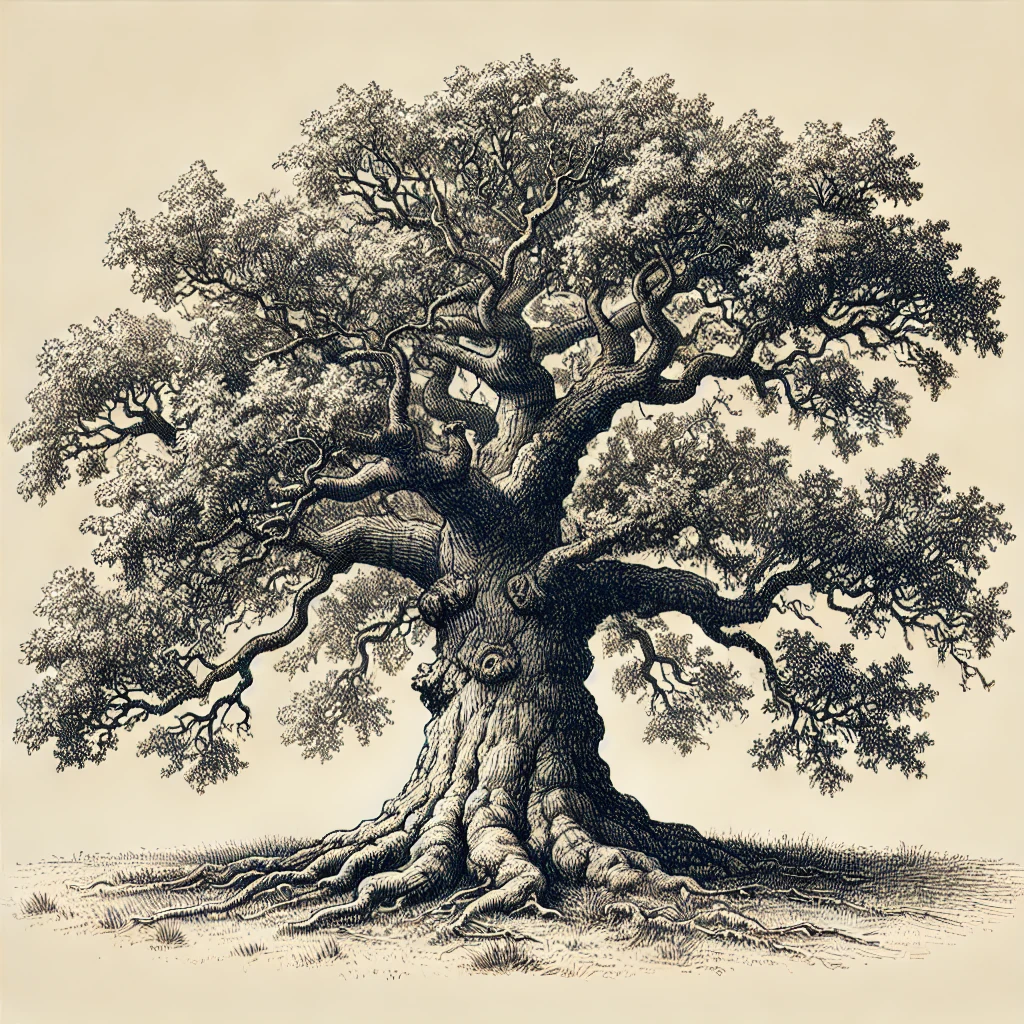
The Chambers Family
Written by Ian Davis. Started 17 December 2025. Last updated 10 March 2026.
Introduction
The Chambers family are my mother’s line, traced back through my grandfather William Joseph Chambers, who was born in an army barracks in Ireland in 1905, to the earliest recorded ancestor, a man named John Chambers whose son was christened in a small Suffolk parish church in 1623. The account that follows covers nearly four hundred years of one family’s history, from the reign of James I to the late twentieth century.
It draws on parish registers, census returns, civil registration records, hearth tax returns, newspaper reports, and military service records, supplemented in places by family memory where documentary evidence runs out.

For most of that time the Chambers were agricultural labourers rooted in a tight cluster of parishes in north Suffolk, in the rural heart of East Anglia, about ninety miles north-east of London and twenty miles inland from the North Sea coast, right on the border with Norfolk. The parishes of Ubbeston, Fressingfield, Wilby, and their neighbours formed the boundaries of the family’s world for over two hundred and fifty years and quite possibly longer. They appear in the records as people of modest means, sometimes very modest indeed: by the mid-nineteenth century at least two members of the family ended their lives as paupers, and one died in the workhouse.
The family’s long association with these parishes came to an abrupt end in 1879 when both parents of a young family died within two years of each other, the father from tetanus after a cart accident and the mother from tuberculosis, leaving eight children orphaned. The children were taken into institutional care and subsequently scattered across England, from Yorkshire to London, with one eventually emigrating to Canada.
The family’s trajectory from that point follows a pattern familiar to many rural English families of the period: generations of agricultural labour on declining wages, punctuated by high child mortality, dependence on poor relief, and the slow erosion of the rural economy that eventually pushed people towards the towns and cities, or into the army. My great grandfather, George Henry Chambers, was orphaned at fourteen, ran away from an institution to enlist in the Royal Artillery and served in India, Crete, and South Africa, rising to the rank of sergeant. He married Louisa Hemmings, the daughter of a immigrant killed in a Welsh mining disaster, and settled in Newcastle upon Tyne. Within two generations the family had gone from the clay fields of Suffolk to the industrial terraces of Tyneside, and the world their ancestors had known had vanished entirely.
Contents
Part One: the Seventeenth and Eighteenth centuries
- John and Alles — the earliest traces of the family in the tiny Suffolk parish of Ubbeston
- Jeremy and Rachel Strut — still in Ubbeston, living close to the threshold of poverty.
- Joseph (I) and Mary Hill — the move to Fressingfield, where the family would remain for generations.
- Joseph (II) and Elizabeth Stigold — rooted in Fressingfield through almost a century of agricultural change.
- Joseph (III) and Sarah Meen — two marriages and a family thinned by infant mortality.
- James and Mary Ann Martin — a slide into poverty and dependence on the parish.
Part Two: the Nineteenth and Twentieth centuries
- William and Rebecca Brooks — leaving Fressingfield and a catastrophe that scatters the family.
- George Henry and Louisa Hemmings — from orphaned farm boy to army sergeant.
- William Joseph and Florence Hall — the move south, from Tyneside to Essex.
Appendices
Further Reading
- A Century of a Suffolk Village: Fressingfield 1750-1851. Fressingfield Branch of the Workers’ Educational Association, 1977.
- A Tour through the Eastern Counties of England, Daniel Defoe, 1722. (Free on gutenberg.org)
- Life as a Farm Worker in Nineteenth Century Suffolk. Andy Kerridge, 2022.
- Looking Back at Fressingfield. Fressingfield Branch of the Workers’ Educational Association, 1979.
- The Evolution of a Village. Mary Cufley, 2016.